October 2026
Five pieces, and the ones we put back
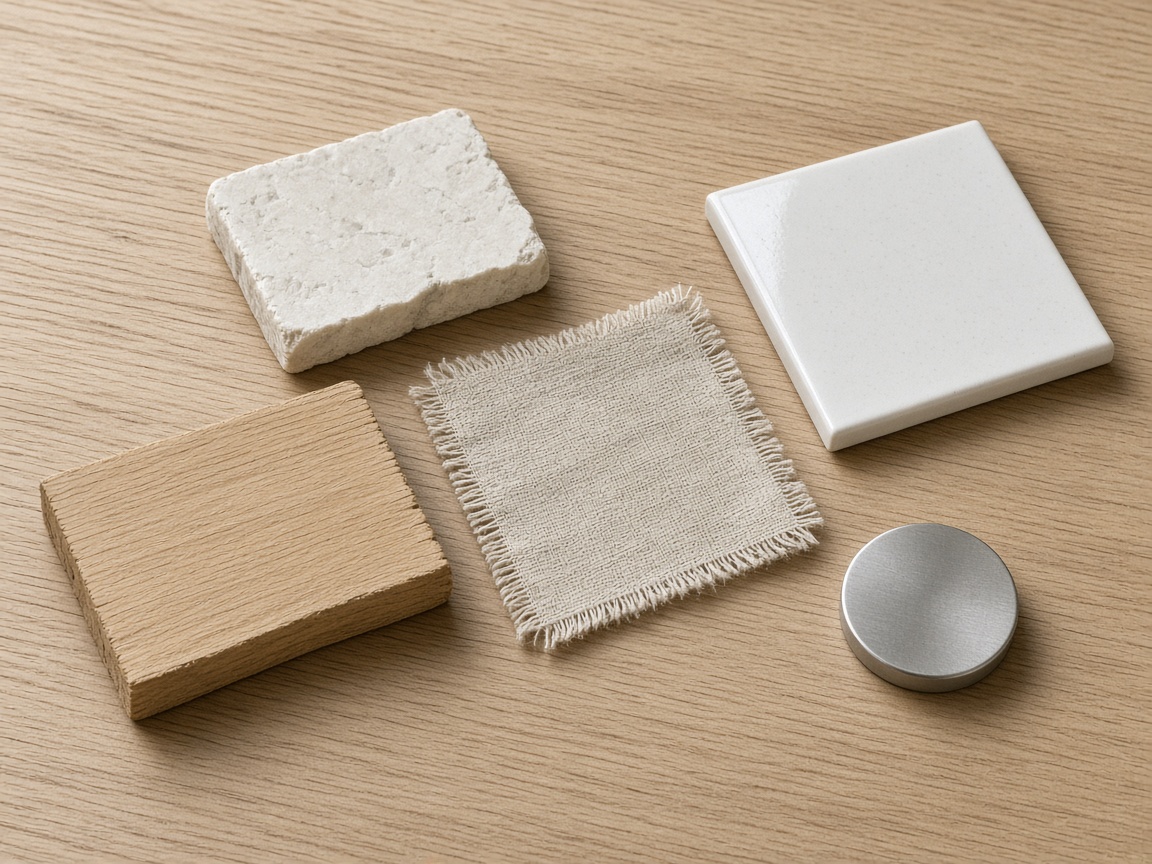
A board that arrives with twenty samples is a shopping list. A board with five is a decision, provided two of the five are allowed to lose. On the table in the photograph: a rough pale stone, a block of light oak, a square of linen with the edge left frayed, a glossy off-white ceramic, and a brushed steel disc the size of a pull.
Stone and oak are doing the work in most of the rooms we draw. They take the afternoon in Florentin without going yellow, and they take a wet umbrella in a shop without staining in a way we have to apologise for. The linen is for a curtain, or it is a curtain we cancel. Cancellation has to stay on the board. If the losing sample is removed, the next meeting starts from taste again, and taste is how a kitchen grows a second shelf of jars.
The ceramic was a splash behind a sink that the wall did not need. The steel disc was a pull for a cupboard that ended as a push-latch, because a pull at that height caught a sleeve. Both stayed in the photograph so the edit is visible. The shop where this exact board was decided is written out as a counter, and empty shelves. The method is the same on an apartment: five pieces, two may lose, nothing is added in the last week because a supplier had a remnant.
We do not publish a “materials library.” The city already has showrooms. What the desk keeps is the reason a piece was refused, in a sentence, on the sheet next to the piece that stayed.